Close nav
Close nav

Reversing the Gaze: Karthika Naïr on Bayadère – The Ninth Life

Posted on: September 25th, 2017 by sjdEditor

I have long admired Shobana Jeyasingh for her structural rigour and compositional invention but more recently I discovered her approach to narrative in dance, through Material Men Redux where she took on a chapter of history as abstruse – as seemingly distant – as indentured labour. Shobana then transformed it into an immediate, riveting, and highly affecting, tale whose shadows, whose injustices, colour the lives of tens of thousands of people across the globe even today, including those of the two remarkable dancers of the duet.


So, it felt like pure serendipity that our paths should cross on Bayadère – the Ninth Life. I’ve been grappling, more than ever this year, with the many complex equations of dance and otherness. And with this piece, Shobana reverses the gaze on La Bayadère ­—one of Europe’s germinal ballets, and quite the grandmother of all orientalist spectacles. She dissects – but always with sharp good-humour – the perceptions of otherness teeming through the visuals and narrative of Marius Petipa’s masterpiece as well as through the writings that probably inspired the French-Russian choreographer and his librettist: Théophile Gautier’s 1838 chronicles of the first European tour by a troupe of Indian devadasis (female temple dancers), who took Paris by storm for a brief period.

Fittingly, this post-colonial revisiting also leads us to wonder why La Bayadère’s regressive, sometimes shockingly racist, representations like the black-face Golden Idol moment, continue to be a part of revivals by some of the world’s great ballet companies.


Karthika Naïr
Dramaturg on Bayadère – the Ninth Life

Bayadere The Ninth Life – 12 Things You Didn’t Know About La Bayadère

Posted on: September 18th, 2017 by sjdEditor

Bayadère – The Ninth Life is a departure from Shobana’s usual works as it is a full-length piece that has a very strong narrative. Moving between fact and fantasy, Shobana interweaves the original story of the La Bayadère ballet with the first-ever visit of Indian temple dancers to Europe in 1838.

But what is the original ballet about? Where and when was it created? And how did it become one of the most well-known ballets still performed throughout the world?

1. The word bayadère is French for Indian temple dancer, originating from the Portuguese word ballar, meaning dance.

2. The first visit of temple dancers to Europe was in 1838. They were brought over to France by an enterprising impresario – EC Tardival (pictured below) – from Pondicherry in south India. They stayed for over a year and performed in Paris, Vienna, Antwerp, Brussels, London and Brighton.

3. Once in Paris, the prevailing attitude towards the cultures of India and the Far East (Orientalism) was vividly reflected by theatre critic, Théophile Gautier:

The very word bayadere evokes notions of sunshine, perfume and beauty even to the most prosaic and bourgeois mind… and through the pale smoke of burning incense appear the unfamiliar silhouettes of the East. Until now bayaderes had remained a poetic mystery like the hours of Muhammad’s paradise. They were remote, splendid, fairylike, fascinating.’

4. La Bayadère was first staged in 1877 by French choreographer Marius Petipa to the music of Ludwig Minkus at the Bolshoi Theatre in St Petersburg.

5. The ballet was created especially for the benefit performance of Ekaterina Vazem, Prima Ballerina of the St. Petersburg Imperial Theatre.


Understanding Petipa’s La Bayadère – an interview with Jane Pritchard

Posted on: September 14th, 2017 by sjdEditor

Jane Pritchard is Curator of Dance, Victoria and Albert Museum, London

What is La Bayadère?

La Bayadère which we are referring to is a ballet choreographed in St Petersburg for the Imperial Russian Ballet in 1877. It takes its title from its heroine who is a Hindu dancing girl. The word is derived from the Portuguese so from the start there is an element of colonial ownership. The choreography was by the Frenchman Marius Petipa who worked on the narrative with Sergei Khudekov and the music (dominated by waltzes) by the Austrian composer Ludwig Minkus. It’s really a typical ballet fantasy of the triumph of love over death – I love Clive Barnes’ description of La Bayadère being ‘Giselle east of Suez’.


Tell us a bit about the historical context of La Bayadère – do you have an opinion on what kind of impact it made at the time and how it might have been received? Has it stood the test of time?

In many ways La Bayadère was typical of late nineteenth century Russian Ballet. St Petersburg audiences loved long spectacular ballets and Bayadère with its four acts, seven tableau, dancing, mime, processions and special effects – most notably the collapse of the temple at the end, was exactly what they wanted. But along with the usual ballerinas dancing in tutus to tuneful music. Western audiences certainly heard about La Bayadère even if they did not see it for it was sufficiently spectacular for prints of scenes from the ballet to appear in illustrated periodicals in London at the time of its creation. Interestingly there were plans to mount a production also in Moscow but having prepared sets and costumes Petipa was suddenly unable to do this. Another choreographer, Joseph Hansen, was asked to create another ‘Indian’ ballet complete with collapsing temple! It was not very successful.

Although little bits of La Bayadère crept out into the West through the C20th it remained a Kirov/Mariinsky ballet until Natalia Makarova mounted her reduced production for American Ballet Theatre in 1980. I know then I was very excited to be seeing the complete ballet having already become familiar with the scene the ‘Kingdom of the Shades’. Markarova retained a C19th feel for the work but even more exciting for historians of dance was Sergei Vikharev’s reconstruction of the complete work in 2000. But it was long! Nevertheless by going back, at least to 1900, it revealed how much the ballet has evolved and changed over time. Given the international standardisation of ballet repertoire, there are now many stagings but not many reinterpretations.

I would say, although I enjoy La Bayadère, and for me it was a highlight of the recent Mariinsky season in London, it’s not a work I would take friends who were not into ballet to see. I would encourage them to see the Kingdom of Shades in a mixed bill.

It is important to understand that for C19th audiences the Indian element was no more than a gloss, an excuse for some exotic elements in the architectural of the sets, not to mention the inclusion of an elephant, tiger, parrots etc. But ballets followed a similar format wherever they were set; the Rhinelands, medieval Hungary, the Turkish Empire or Japan. Audiences were looking for instant exoticism and it’s not so different from us enjoying films and TV series set in interesting locations. I think of the approach to ballets as being similar to the ‘courts’ at Crystal Palace which evoked buildings from different eras and continents from ancient Egypt to South Asia, but no one was worried if they cobbled together architectural details from different centuries from one region! Sources used would be the illustrations and accounts that travellers sent back from their journeys. All a bit like Chinese-whispers. This approach really continues to the middle of the C20th. To more informed eyes of the C21st much seems ludicrous.


What are your favourite elements of La Bayadère? Is the costuming, set, music or any particular scenes?

No question my favourite scene is the ‘Kingdom of the Shades’ which can become an almost abstract work, a formal ballet of atmosphere. You do need a superb corps de ballet and soloists as it is so exposing for dancers. But with a bare stage and just one or two ramps (that actually are meant to represent the slopes of the Himalayas) down which the corps descends at the start it is superb. I would also say that in the complete ballet Nikiya is a wonderful role for a virtuoso dramatic ballerina. I am also fascinated that it is often performed in traditional painted scenery which is a dying art.


You’ve seen Bayadère – The Ninth Life and Shobana’s work – does this impact your view of La Bayadère – does it provoke any particular thoughts for you?

I love the fact that Shobana is questioning the place of this quaint old ballet. You do not have to know the Petipa ballet to enjoy her production but it is fun when you do. To my mind it’s surprising that audiences have continued to accept C19th clichés for so long. In fact, Shobana’s production also references the visit of the Indian devadasi dancers to Paris and London in 1838. Audiences then had little context in which to place their art in so critics wrote about them with Western prejudices and vocabulary.


In Bayadère – The Ninth Life there is an element of time travel – if you were to be transported back in time, where would you go and why?

This is a tricky one as one always thinks about the elements of the past that fascinate not the horrors. I have always been intrigued by the late C19th early C20th it was such a time of creativity and change but I would want to be within artistic circles. BUT then one would end up in the Great War which would be horrid and I am not certain there would be dentists available to solve all my problems with my teeth. I think I am better off living now!


Finally, please tell us a bit about yourself and what you do – people will be very interested to learn about your work and also how often you attend the ballet and other productions.

I and my two sisters grew up in London with parents who encouraged us to go to theatres, concerts, museums and take advantage of what London had to offer and I have never looked back. I see a very wide range of dance in different styles both for pleasure and work. I’ll be at theatre or dance three times a week – its where most of my money goes! As Curator of Dance at the Victoria and Albert Museum, London, I am expected to care for a wide range of material relating to dance in performance so I am always learning new details about dance and dancers. I’m lucky to have such a stimulating job.


Thanks for your fascinating insights Jane.

Bayadère – The Ninth Life: rehearsal photographs

Posted on: September 13th, 2017 by sjdEditor

Tom Piper about his design for Bayadère – The Ninth Life

Posted on: July 30th, 2017 by sjAdmin

The main challenge has been how to critique the visual traditions of established ballet La Bayadère in a witty and meaningful way without undermining the dancers. We want to look at the objectification of the original bayadère dancers and how they were fetishised by Victorian male society. Their appearance was sensually compared to animals and we needed to find a way to express this visually with a sense of irony or parody.

Many of the early ideas revolved around depicting cabinets of curiosities of gentlemen collectors in which all of the exotic objects required in the ballet could be displayed alongside the costume of the bayadère. We also looked at how Orientalist tropes such as stuffed parrots and peacocks might also be used to heighten the parody of a European view of what is different, mysterious and worthy of collecting.

The early versions of this idea were too constricting to the rest of the piece, Shobana’s version of the Kingdom of the Shades in the final section and the first section in which a contemporary Indian man is confronted, via social media, with the absurdity of La Bayadère in the modern world, both required a freer setting. So I began to explore how framing and enclosure could be used at a more subliminal level to highlight the intensity of gaze on the figure that the piece requires from the viewer.

We begin with a single projection screen that allows us an insight into how modern communications occur, as ideas about the traditional ballet bounce back and forth between a man in India and one in the UK. Visions of the dancers on the screen merge with real dancers behind the screen who then enter the main playing space, confronting the audience with distilled iconic fragments of the original ballet.

At the moment we are now imagining the centre section of the piece to take place beneath a chaotic explosion of cables and lights, half contemporary India, half exotic jewel light installation, with a series of golden mobile frames beneath, which the dancers can move to define space, frame figures and create a dialogue between the chorus of dancers and the bayadère figure they both idolise and reject.

I see my role as offering new versions of the visual landscape of the piece which will chime with, but also challenge the existing choreography and create a world in which the dancers fully interact with the physical elements of the work rather than the design existing as a disconnected backdrop to the action of the dance.

Tom Piper 2017©

Material Men redux: blog by designer Simon Daw

Posted on: January 15th, 2017 by sjAdmin

Simon Daw
Set, Costume & Video Designer for Material Men redux

Spring 2015
I was in the middle of an intense research period on another project when Shobana rang out of the blue to talk about costume and set design for Material Men, the first incarnation of Material Men redux. At that point the key information was that Elena (Kats-Chernin) was writing the music and that there were two very different dancers and dance styles. I’d done quite a lot of design for contemporary dance and ballet but never worked with classical Indian dance or hip hop. I was intrigued.

Summer 2015
I like designing for new dance works as in my experience all aspects that combine to make the final piece develop in parallel in a very organic way, informed by each other. We had a really effective research and development period in London over this summer with the composer, Shobana and the dancers working together in a rehearsal room in London. Shobana brought a sari into the studio to use as a metaphor for India and home. It became such a strong idea, almost a third dancer – even a naughty child sometimes, it was so unpredictable!
It was great for me to be in the studio, watching. The hip hop stuff that Shailesh does is so immediately impressive, the way he throws himself about, you worry he’s going to injure himself. And I was struck too by the controlled flow of Sooraj’s classical Indian dance. And how Shobana was able to get these two styles of dance to come together naturally.

Shobana and I talked about the themes of the project, the idea of movement and borders. I started collecting images of border fences, these places where some people are allowed to go through and others aren’t. And this led to the main sculptural element of the set, a line of high poles which cut across the stage.

Summer 2016
As Shobana started to explore the dancers’ personal family history we started to investigate further about the journeys undertaken by indentured labourers. After the tour of Material Men in autumn 2015, Shobana realised there was so much more to say and decided to create a full-length version – Material Men redux. Shobana wanted to use archive footage and photography to help tell the story of these people taken half way round the world to work as indentured labourers, barely one step up from slavery, and the core focus of the work became the journey from Calcutta to Suriname taken by Shailesh’s great great grandparents.

Shobana talked to me about adding video projection and film to the design and it struck me that it would be great to add video to the set itself. We set up some tests to experiment with mapping video onto the set and the Sari.

Autumn 2016
I was listening to the new version of the soundscore, where Leafcutter John has added the recorded voices of the dancers and statistical information – about the ships’ lists, who is on the list and what happened to them. It’s very moving.

I originally came from a Fine Art Photography background before moving into stage design so the use of film and image is always a very natural extension of my set and costume designs. With a design such as this one for Material Men redux, it is important to for me to keep control of set, costume in order to really focus on what is central to the piece.  We asked Jo Walton, an image researcher, to find out what images of indentured labour there were. We needed to get a sense of what was available to us. As well as the journey taken by Shailesh’s family, we wanted to look at the many different routes taken by indentured labourers from India – to South Africa, Jamaica and Malaysia as well as South America.

Jo pulled in images from all over the world. Shobana and I looked at this material and edited it down to a few key images which tell the story in a very visual way. To get a feeling of what these people went through.

Indentured labour thankfully was outlawed before the arrival of film so we only have still images from this time. I’ve intercut these with film footage from the 1920s showing workers on sugar plantations, using tiny snippets of film and repeating them again and again, showing the endless drudgery of the work.

January 2017
Shobana and I are still exploring how we use the film. One of our key conversations is about how we show the film on stage. Sometimes we will project the film onto the sari, stretched out to form a screen. At other times, more abstract images – the waves of the sea maybe – are projected onto the fence poles of the set.

It’s been a technical and compositional challenge to use these very old images. One of the things we do is to zoom gradually into the detail of the images, revealing clues to the audience.  For instance, a shot of children getting breakfast on a ship, slowly pans across their ragged clothes until eventually it discovers a child’s frightened face.

We are nearly there, making final finishing touches to the film. I’m preparing options which we’ll try with the lighting, the final music and the dancers to find out what works.

Simon Daw 2017©

Photo by Jane Hobson

Material Men redux: the Smith Quartet

Posted on: December 8th, 2016 by sjdEditor

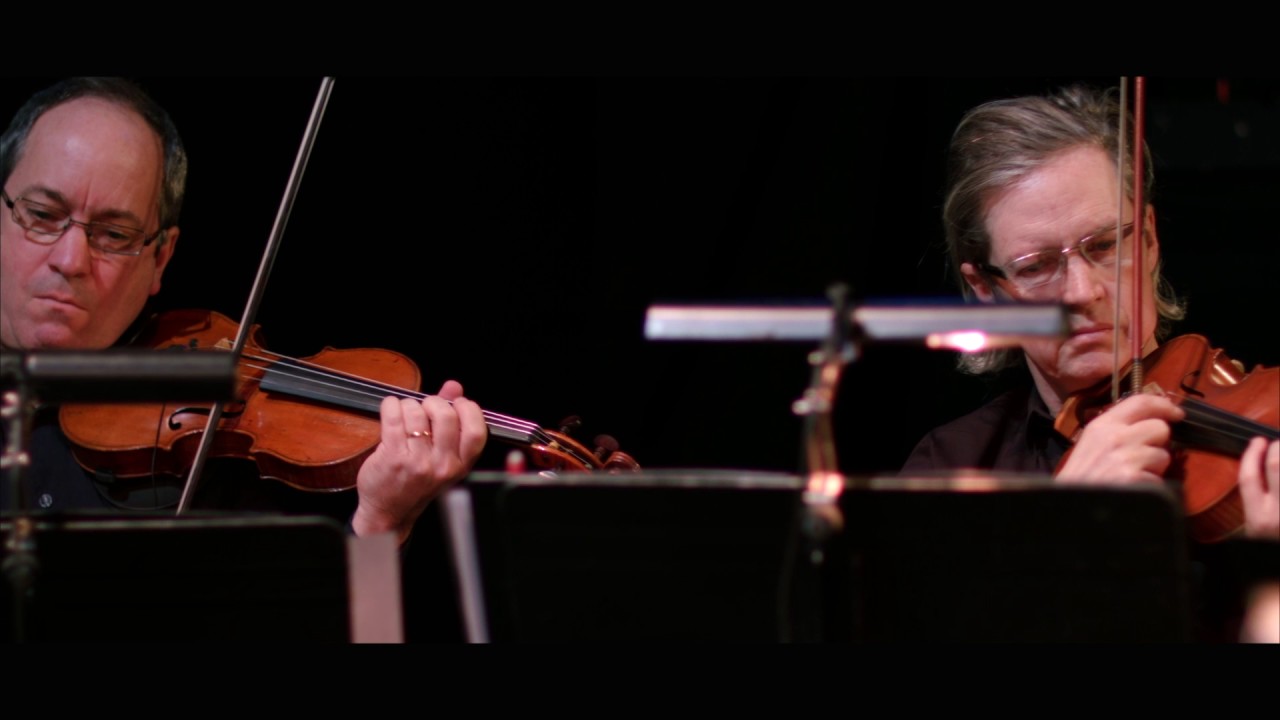
We meet Deirdre Cooper, cello and Nic Pendlebury, viola who together with Ian Humphries, violin and Rick Koster, violin comprise the renowned and highly acclaimed Smith Quartet. Created by composer extraordinaire Elena Kats-Chernin, the score juxtaposed with Leafcutter John’s electronic music, is played live on stage, and is central to this dramatic work.

Short film by Gary Tanner.

Material Men redux: Getting Ready

Posted on: December 1st, 2016 by sjdEditor

Just prior to any performance there is a hive of activity – watch how The Smith Quartet, dancers and the production team all prepare for curtain up.

Short film by Gary Tanner.

Material Men redux: the Stories

Posted on: November 22nd, 2016 by sjdEditor

Shobana talks about the two stories the work brings to light. The first is the journey of the dancers; how one chose hip hop, the other classical Indian dance. The second is of indentured labour and how the dancers represent both those who left India and those who stayed behind.

Short film by Gary Tanner.

Material Men redux: the Sari

Posted on: November 15th, 2016 by sjdEditor

The subject of this film is often referred to as the ‘third dancer’ in the work. The traditionally patterned South Indian sari that is used in this work comes alive as a key character during Material Men redux. Shailesh and Sooraj twist, wrap and unfurl it as they dance together.

Short film by Gary Tanner.

Connect with us

Instagram

Join our mailing list

Sign up to our e-newsletter bringing you the latest company news and shows.

Our e-newsletters include information about our work, events, fundraising appeals and learning activity. We’ll also send you occasional additional emails during tour periods featuring photo galleries, articles and trailers.